

Practical Sales Training™ > How People Work > The Verbatim Effect
The Verbatim Effect
What Is It
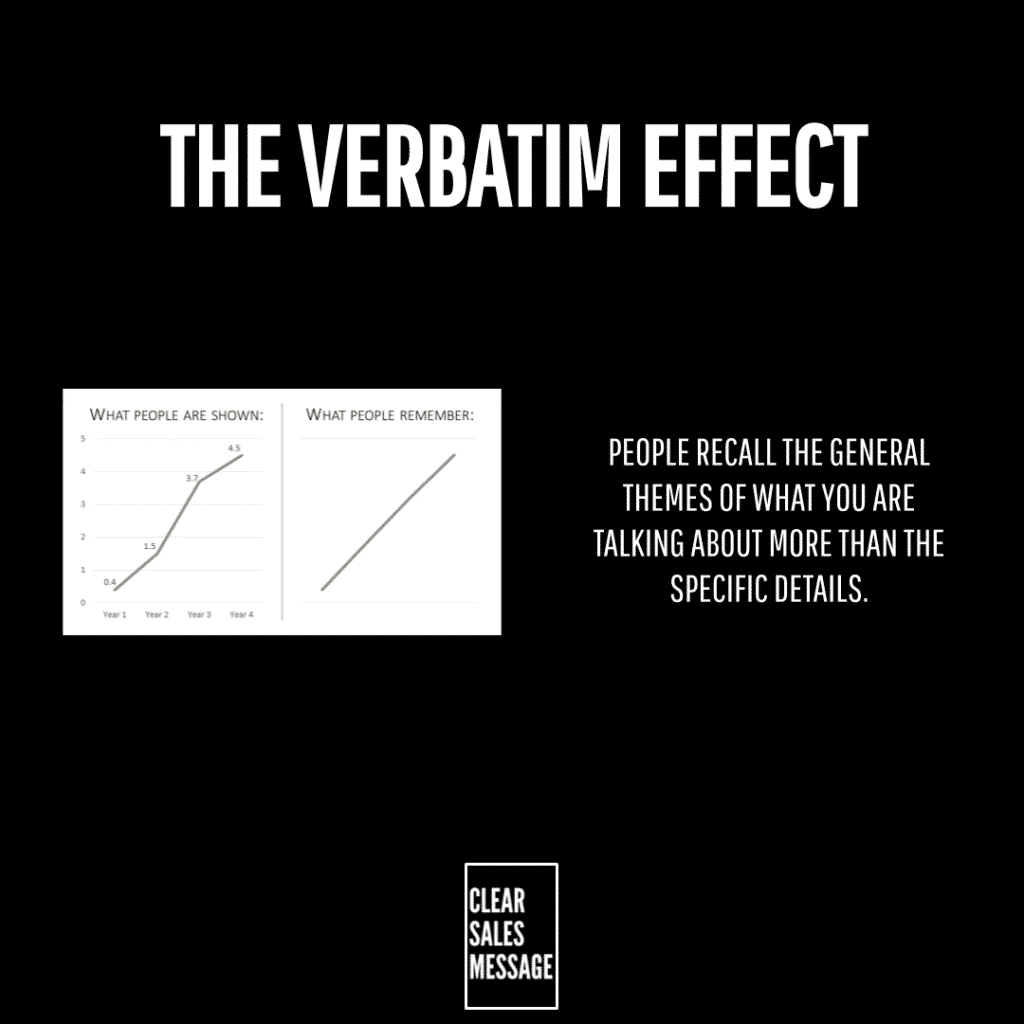
The Verbatim Effect is all about the fact that people will often forget the specifics of your communication, but will remember the general theme, or gist, of what you’re saying.
The exact words fade fast. The overall impression lingers far longer.
That gap between what you said and what gets remembered is where this effect lives, and where a clear theme earns its keep.
Why Does It Work
This comes down to the fact that most of the time we’re simply guessing and seeking to fill in the gaps. We often skim information we read, so it’s no different for the information we hear or see.
The main thing to consider here is that the theme or action point from your communication is made obvious, so it doesn’t degrade as your message travels.
Detail without a clear theme just gets lost. A clear theme without much detail still survives, and often gets repeated word for word.
How Can You Use It
Prioritise the theme over the details
Remember that the theme and direction of your communication can often be more important than the details. Think about how you can theme your communication to ensure everything focuses on a high level, simple concept that can be easily recalled.
Repeat the core message deliberately
A single mention of your key takeaway rarely survives. Say it more than once, so it’s the thing left standing once the details have faded.
Frame it as the takeaway explicitly
Don’t leave your buyer to guess what the main point was. Name it directly, so there’s no ambiguity about what should stick.
When It Works Best
This works best in anything detail heavy, presentations, reports, technical explanations, where the audience simply can’t retain every fact.
It also works best when you deliberately repeat the theme, since a single mention buried once in a long piece rarely survives on its own.
When It Becomes Dangerous
It backfires if the “gist” people walk away with is actually wrong. A confusing message can compress into a memorable but inaccurate takeaway, which is worse than no memory at all.
It also becomes risky if you rely on this to excuse sloppy communication. The theme still needs the detail underneath it to be genuinely true.
Overloading a talk with detail and no clear theme causes its own problem too, since the audience compresses it into whatever gist they can find, right or wrong.
Common Mistakes
Burying the main point in detail
If the theme never gets stated plainly, the audience compresses your message into whatever they happened to catch, not what you intended.
Only stating the theme once
A single mention rarely survives a long piece of content. Repeat the core message at key points so it has a genuine chance of sticking.
Assuming detail alone will be remembered
Numbers and specifics rarely stick on their own. Attach them to a clear theme, or they’ll simply disappear from memory within days.
The Verbatim Effect – An Example
A Retirement Planning Presentation
Hypothetical Example: A financial advisor delivers a 30-minute presentation on retirement planning. The presentation includes detailed stats, percentages, and tax regulations. A week later, the audience doesn’t remember the numbers or technical terms, but they do recall the main theme:
“Start saving early to have financial freedom later.”
By ensuring the key message was repeated and framed as the core takeaway, the advisor made sure the gist of the talk stuck, even if all the finer details were forgotten.
See also