
Practical Sales Training™ > How To Lose The Sale > The Rhetoric Effect

The Rhetoric Effect
What Is It
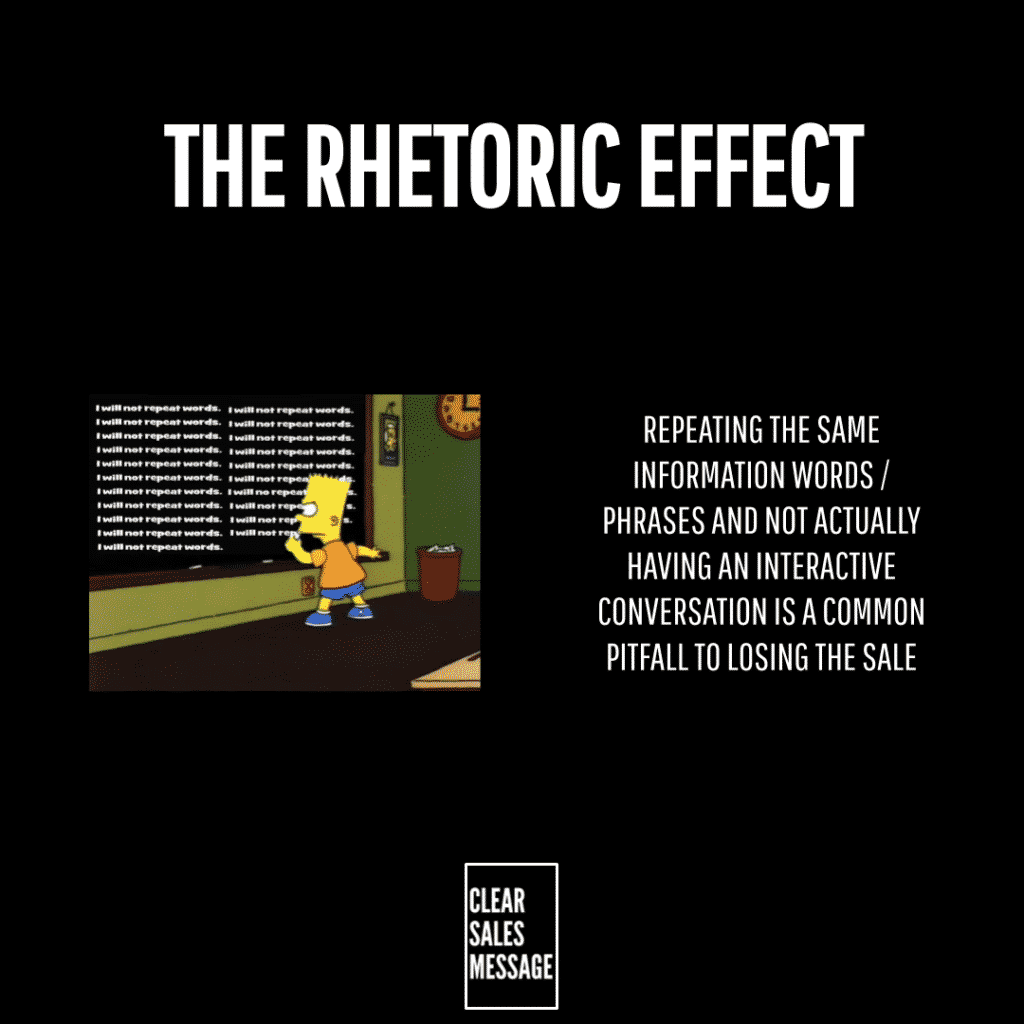
The Rhetoric Effect is about not actually having an interactive conversation. Instead, you talk at your potential buyer, repeating the same words and phrases over and over.
It feels like confidence from the salesperson’s side. It feels like being ignored from the buyer’s side.
The gap between those two experiences is exactly why it loses so many sales that should have closed easily.
Why Does It Work
It works, in the sense of losing sales, because it demonstrates a complete lack of respect for your potential buyer. Far from understanding your buyer and what they need, trying to steamroll them with a one size fits all pitch makes them feel insignificant.
It’s also presumptive, and it can push them away entirely.
A buyer who tries to speak and gets talked over learns fast that their input doesn’t actually matter here. So they stop trying, and often stop listening too.
How Can You Use It
Ignore what they actually say
If you really want to lose the sale, don’t listen to your potential buyer. Just wait for your turn to speak, then get back to repeating why your offering is so amazing.
Repeat the same script regardless of the response
Say the same tagline no matter what objection comes back. The buyer’s specific concern becomes irrelevant, since the pitch never actually changes to meet it.
Talk over any attempt they make to add detail
The moment they try to explain a specific need, jump back in with the same three selling points. That’s the fastest way to make sure the conversation never actually becomes one.
When It Works Best
Honestly, it never works in your favour. There’s no version of talking at a buyer that leaves them feeling more understood than before.
The closest thing to an exception is a very short, low stakes pitch where speed genuinely matters more than depth, and even then, it’s a compromise, not a strength.
When It Becomes Dangerous
It’s dangerous the moment a buyer notices they’re being managed rather than heard, and that moment usually arrives fast.
It becomes worse the longer the pitch continues without adapting, since each repeated line confirms the pattern rather than being a one off slip.
It also damages more than the single sale. A buyer who feels talked at rarely comes back, and they’re unlikely to recommend you to anyone else either.
Common Mistakes
Treating every objection as the same objection
Responding to different concerns with the exact same line signals you weren’t actually listening to any of them.
Confusing repetition with persuasion
Saying “fast, efficient and affordable” three times doesn’t make it three times as convincing. It just makes the buyer notice you’re repeating yourself.
Interrupting instead of reflecting
Cutting a buyer off to steer back to your script feels efficient to you and dismissive to them. Reflecting what they said back usually costs you seconds and earns real trust.
The Rhetoric Effect – An Example
A Sales Call Gone Wrong
Imagine this scenario. You’re on a call with a salesperson. You say:
“I’m just looking to get a feel for what you offer. I’m not ready to make a decision yet.”
But they reply with:
“What you need to understand is our solution is the best. It’s fast, efficient and affordable. Our clients love it. It’s fast, efficient and affordable. You won’t find anything better. Did I mention it’s fast, efficient and affordable?”
You try again:
“Sure, but I have a few specific needs…”
They interrupt:
“You won’t need to worry about that. This is fast, efficient and affordable. Let’s get you signed up.”
Why this fails: There’s no listening happening at any point. The same tagline repeats regardless of what you actually say, with zero relevance to your real needs. As a result, the whole exchange makes the buyer feel invisible.
Better approach: Instead of treating your pitch like a script, turn it into a conversation. Ask questions. Reflect what your buyer says. Build a case based on them, not just you.
The Rhetoric Effect is a powerful reminder of what not to do. Don’t pitch at your buyers. Speak with them.
See also: