

Practical Sales Training™ > How To Convert > The Push Back
The Push Back
What Is It
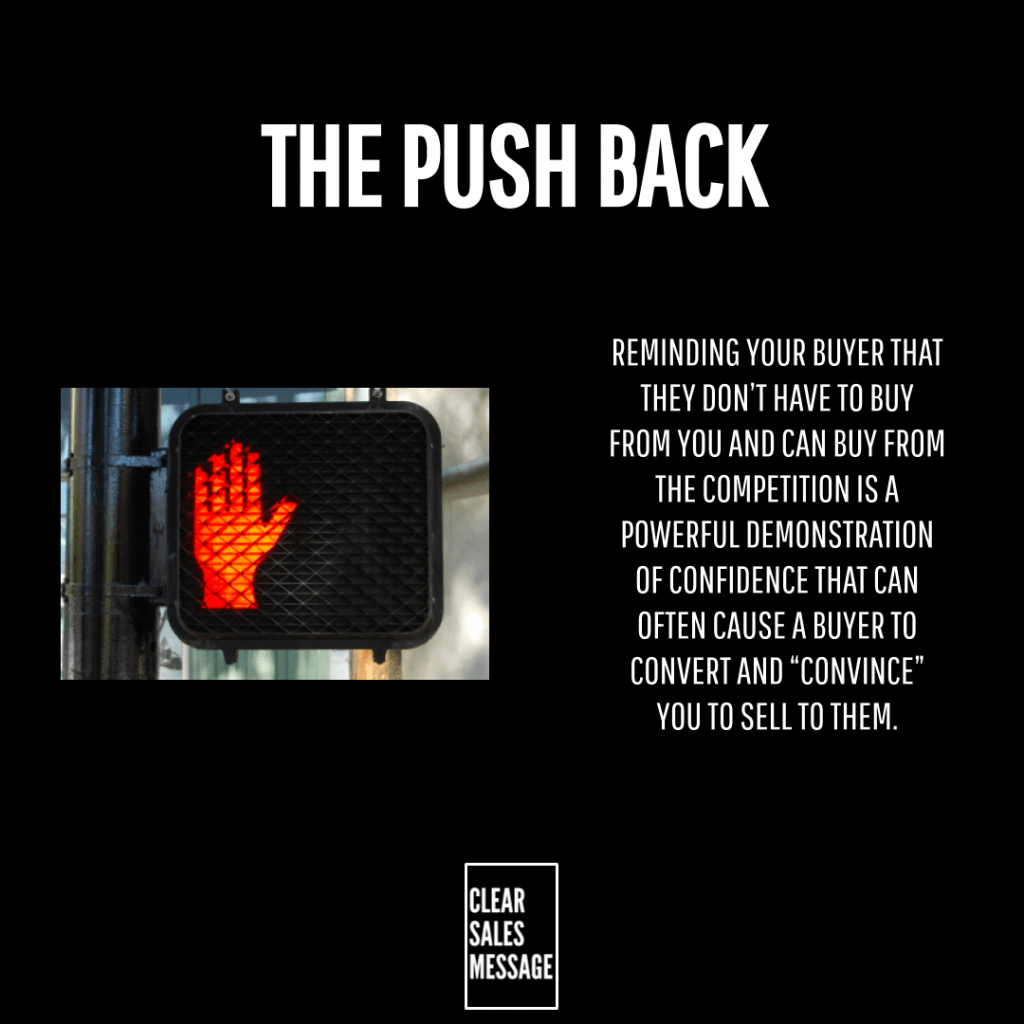
The Push Back means reminding the buyer, right at the point of your offer, that they’re in control. They don’t have to buy from you. Nobody’s forcing their hand.
It sounds like the opposite of a sales tactic. Most training tells you to push harder at the close, not step back. That’s exactly why it works so well.
You’re not backing away from the sale. You’re removing the pressure that usually sits underneath it, so the buyer can actually think clearly instead of just defending themselves.
Why Does It Work
As buyers, we’re looking for confidence, certainty and expertise. But we also want to feel in control of the decision, not just the outcome.
Everyone likes to buy. Nobody likes to be sold to. So by pushing back at the exact point of closing, and reminding the client to choose what’s genuinely best for them, you remove the one thing that makes people dig in and resist.
There’s a deeper effect happening too. The moment you tell someone they’re free to walk away, their guard drops. As a result, they stop evaluating you as a salesperson and start evaluating you as the safest option on the table.
It also works because it flips the usual dynamic. Instead of the buyer defending against your pitch, you become the one helping them make a smart choice, even if that choice happens to be someone else.
How Can You Use It
Say it out loud at the point of offer
At the point of making your offer, in person or on the phone, use a version of this phrase:
“Of course you don’t have to use us, you can use anyone who helps with xxxx problems, but make sure they can meet your needs which means checking they do xxxx”
Complete it with the specifics of the client’s actual problem. Then follow it with a short checklist tailored to their exact needs.
Build the checklist around what your competition skips
For example, if it was creating a Clear Sales Message, I’d advise you to use a company that helps you develop an opening gambit and a causal chain.
The chances are, the competition you’re speaking to doesn’t do this. So it makes them seem less viable, and creates curiosity in the buyer about what else your offer might do that others don’t.
Give information, not pressure
Whatever detail you’re giving, you’re handing the buyer the information and the opportunity they need to decide. You’re not pushing them to do anything they don’t want to do.
That distinction is what makes the whole thing feel honest rather than clever. The buyer can sense the difference immediately.
When It Works Best
This works best when you genuinely believe in what you offer, since the freedom you’re handing over only lands as confidence if it’s real. Faking it shows.
It also works best in higher trust, higher stakes decisions, where buyers already expect to feel pressured. The contrast is what makes it stand out.
When It Becomes Dangerous
It backfires if it’s used as a script rather than a genuine moment. Buyers can spot a rehearsed line about “freedom to choose” just as easily as they spot a hard close.
It also becomes risky if your checklist quietly misrepresents the competition. Disqualifying rivals through honest specifics is fair. Disqualifying them through vague implication isn’t, and it can damage your own credibility instead.
Overuse flattens it too. Say “you don’t have to buy from me” in every single conversation, and it stops sounding like generosity. It starts sounding like a tactic, which is the one thing this approach can’t afford to look like.
Common Mistakes
Giving the freedom without the checklist
Saying “you don’t have to use us” on its own just sounds like indifference. The checklist afterward is what turns it into expertise instead of a shrug.
Making the checklist generic
A checklist that any competitor could also tick off does nothing. It has to include the specific things you know matter, that most competitors quietly skip.
Undermining it straight after with pressure
Following the push back with “so, shall we get started then?” cancels out the whole effect. Give the buyer the space you just promised them, even if it means a pause you’re not comfortable with.
The Push Back – An Example
Web Design Agency
“Of course, you don’t have to work with us – there are lots of agencies out there who build websites. Just make sure whoever you choose takes time to understand your customer journey, builds mobile-first, and includes SEO as standard – otherwise, you’ll just have a pretty site that doesn’t perform.”
This works on three levels at once. It removes pressure, so the buyer feels safer straight away. It also positions the agency as the expert, since it quietly sets out what should matter in the decision. And, without saying it outright, it disqualifies the competition anyway.
See also