
Practical Sales Training™ > How To Connect With Your Buyer > The Mascot Effect

The Mascot Effect
What Is It?
A mascot is a character that represents your business. So instead of a logo, buyers see a face.
That face grabs attention fast. It also sticks in memory far longer than a symbol ever could.
Why Does It Work?
We relate to living things differently to objects. So this works much like personifying a product, such as Henry the Hoover.
Give a mascot a voice and personality, and something shifts. Because we start treating it like a person, not a company symbol.
That shift builds a real relationship. So buyers feel connected to the mascot, and that connection carries over to the brand behind it.
How Can You Use It?
Pick A Character That Fits
Choose an animal, a person or a cartoon version of a real person. So the character needs to work with your brand, not against it.
Give It A Real Personality
A mascot needs more than a look. So give it a voice, a tone and a way of speaking that feels consistent everywhere it shows up.
Use It As The Face Of Your Marketing
Let the mascot appear across ads, your website and customer touchpoints. So it becomes the thing buyers picture, instead of your logo.
When It Works Best
This works best for brands wanting warmth and recognition. Insurance, food and consumer apps all use this well.
It also works when a market feels crowded and similar. So a strong mascot can cut through where another logo would just blend in.
When It Becomes Dangerous
The risk is choosing a mascot that clashes with your brand. A playful character on a serious, high stakes offer can undercut trust fast.
Inconsistency causes a similar problem. Because if the mascot’s tone shifts randomly, buyers stop trusting the character at all.
Used well, this builds lasting recall. Used carelessly, it just confuses what your brand actually stands for.
Common Mistakes
Choosing The Wrong Tone
A silly mascot on a serious offer feels jarring. So match the character’s personality to what you actually sell.
Using It Inconsistently
A mascot that appears once and disappears builds no recall. So use it repeatedly, everywhere buyers see your brand.
Letting The Mascot Overshadow The Offer
A mascot should support the sale, not replace it. So always tie the character back to a real reason to buy.
The Mascot Effect – An Example
Barkley The Insurance Dog
A home insurance company creates a friendly animated dog named Barkley. He appears in ads, explains policy options simply, and pops up on the website with tips like “Barkley’s Tip: Cover your phone and laptop with our personal belongings add-on.”
Barkley isn’t just decoration. So he makes the brand feel approachable and trustworthy at the same time.
Customers connect him with reassurance. Over time, he becomes more memorable than any logo or slogan alone.
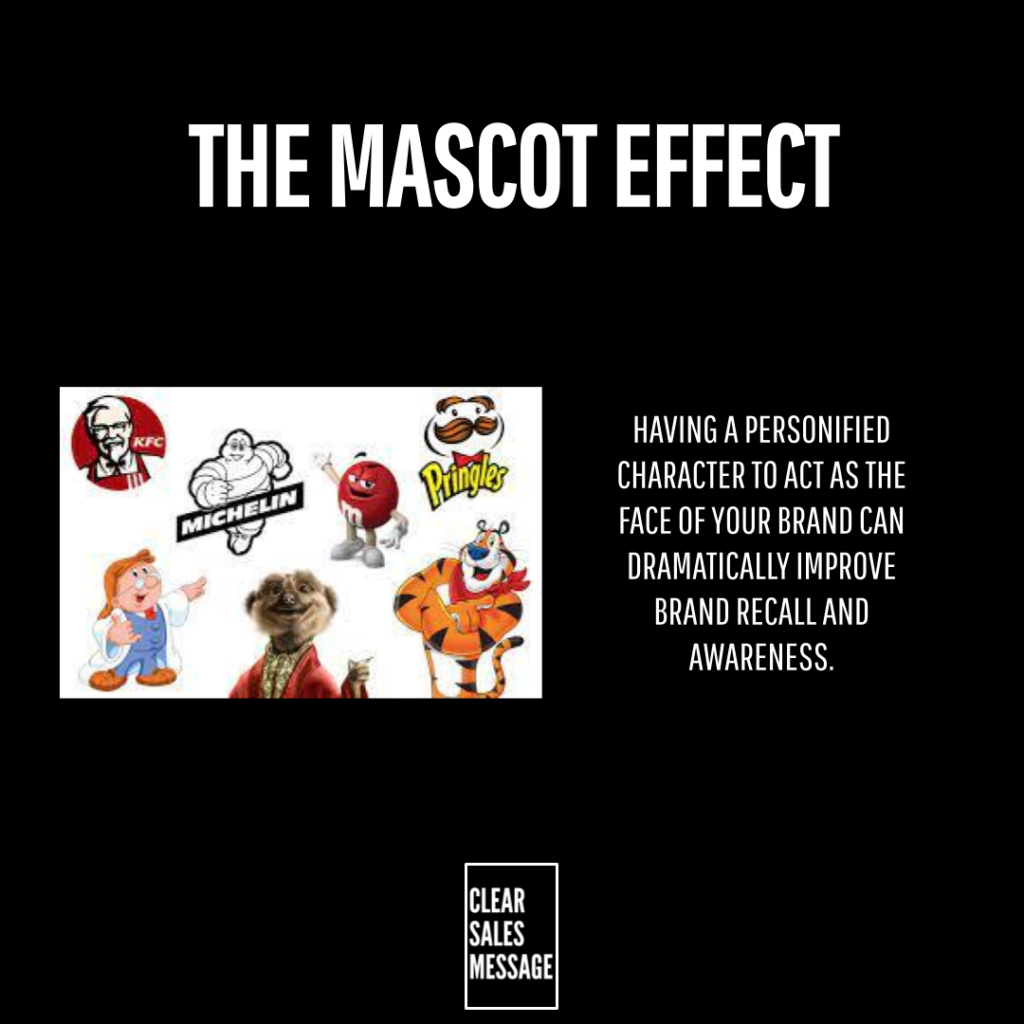
This pattern shows up everywhere. Think of the meerkat in insurance, the tiger on cereal boxes, or the owl in language learning apps. Each one builds emotional connection and instant recognition.
See also