
Practical Sales Training™ > How To Convert > The Maintenance Effect

The Maintenance Effect
What Is It?
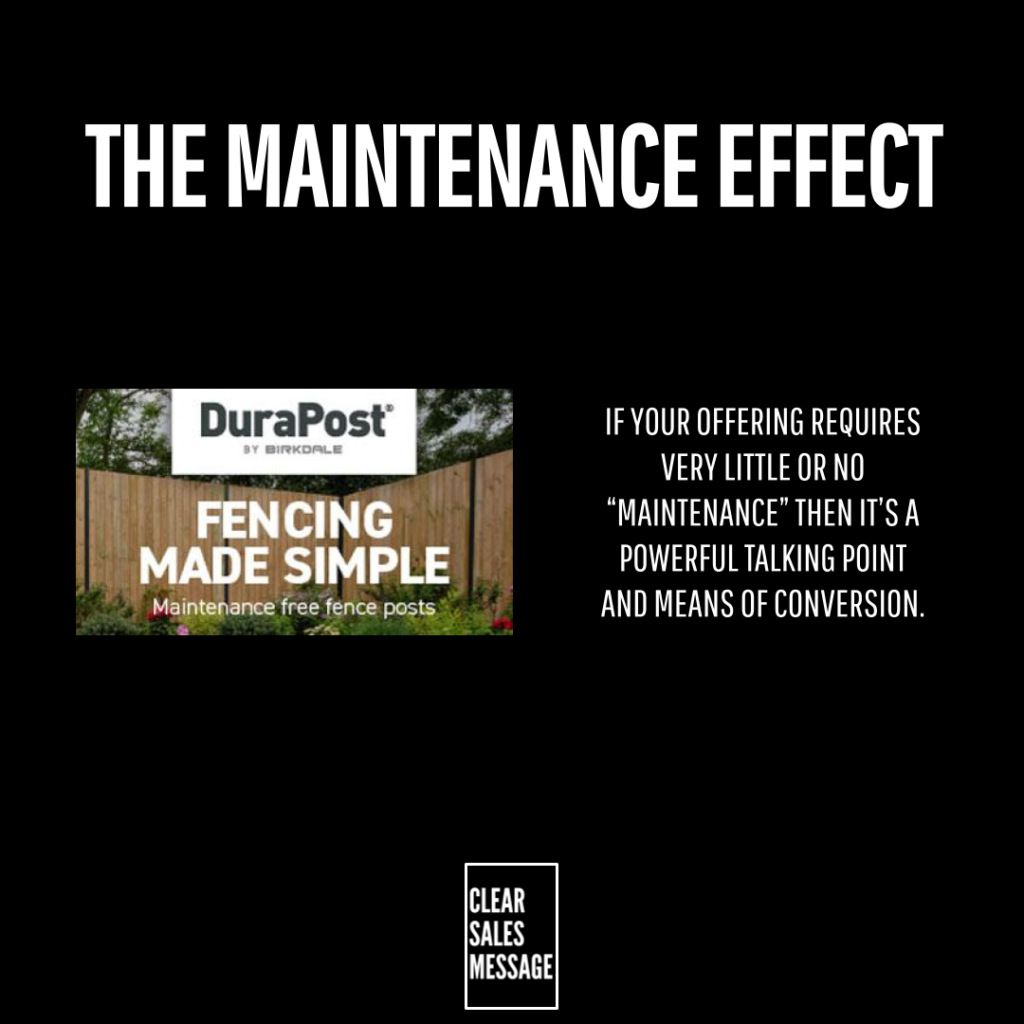
Little to no maintenance is a real selling point. So buyers who want to avoid hassle notice it fast.
Nobody wants extra work later. So the promise of none at all stands out.
Why Does It Work?
It follows the path of least resistance. So buyers pick the option that asks less of them later.
Even a pricier option wins here. Because saving future time and effort often matters more than saving money today.
This is a long game decision. So buyers are weighing years, not just the moment of purchase.
How Can You Use It?
Find The Hidden Cost
Think about what your buyer really fears down the line. So look past the sale itself and consider the ongoing cost, time or complication that could show up later.
Promote It If You Already Have It
If your offer is already low maintenance, say so clearly. So don’t bury this benefit. It’s often stronger than any feature list you could write.
Adapt If You Don’t
If your offer currently needs upkeep, look at what could change. So even small adjustments toward less maintenance can shift how buyers see the whole product.
When It Works Best
This works best for anything with an ongoing cost after purchase. Gardens, software and equipment all fit naturally here.
It also works well when buyers have been burned before. So if upkeep caused pain in the past, low maintenance becomes an easy win now.
When It Becomes Dangerous
The risk is claiming low maintenance when it isn’t true. Buyers find out fast, and the disappointment lands harder than if you’d never promised it.
Overselling this angle can also backfire. So don’t call something maintenance free if it still needs regular attention.
Used honestly, this earns real trust. Used loosely, it just creates a future complaint.
Common Mistakes
Overstating The Claim
Calling something maintenance free when it isn’t gets noticed quickly. So only claim what’s genuinely true.
Hiding The Benefit
Low maintenance buried in small print gets missed. So bring it into your main message, not a footnote.
Ignoring The Real Fear
Buyers care about specific hassles, not vague ease. So name the actual cost or effort you’re removing.
The Maintenance Effect – An Example
The Low Maintenance Garden
A garden landscaping company promotes this line: “We only use slow-growing, drought-tolerant plants, so your garden looks amazing all year round with almost no upkeep.”
They frame this as a core benefit, not a small extra. No pruning. Or constant watering. No expensive upkeep, just long term beauty with minimal effort.
Buyers aren’t just buying a garden here. So really, they’re buying peace of mind about every future weekend.
The same idea works in tech too. One software company puts it simply: “Our software updates automatically. No downloads, no downtime, no IT headaches.”
See also