
Practical Sales Training™ > How To Get Attention > The Durability Effect

The Durability Effect
What Is It?
Durability sells hardest to two kinds of buyer. Heavy users, and anyone facing an expensive repair if something breaks.
Promote how long your product lasts, and you speak directly to both. The angle works because it removes a specific worry before it even forms.
Why Does It Work?
It works because it reassures your buyer that their money will last. That’s another way to justify the price and prove real ROI.
The longer something lasts, the higher its perceived quality. So a durable product also lowers the odds your buyer ever needs repair or maintenance.
Ask yourself two questions first. Does durability actually matter to your buyer? And can your product genuinely back that claim up?
How Can You Use It?
Show The Number Of Tests
Show the number of tests. IKEA famously tests its chairs thousands of times before they ever reach a showroom. So if you’ve tested your product a specific number of times, say the number.
Show It Surviving Extremes
Show it surviving extremes. Car manufacturers prove durability through heat, cold and weight limits. So if your product handles genuine extremes, that proof works harder than any adjective.
Show How Long It’s Already Lasted
Show how long it’s already lasted. Some products run for years, completely unchanged and still working. If yours has a real track record, lead with the actual number of years.
When It Works Best
This works best on big purchases bought once and used hard. Equipment, appliances and anything expensive to replace all fit naturally.
It also works well for business buyers. Downtime and repairs hit their bottom line hard. A durable product removes an entire category of future cost.
When It Becomes Dangerous
The Durability Effect becomes dangerous the moment the proof feels invented. A vague “built to last” claim invites doubt instead of confidence.
It’s also risky when durability just isn’t the point. Push it on a disposable product, and the claim feels odd.
Common Mistakes
Claiming Durability Without Proof
Claiming durability without proof is the most common mistake. So a number, a test or a real timeframe always beats a generic promise.
Promoting It To The Wrong Buyer
Promoting it to the wrong buyer is another trap. Someone who replaces things often still rarely cares how long yours could theoretically last.
Vague Claims Instead Of Numbers
Using vague claims instead of numbers is the last one to avoid. “Built to last” says nothing, but “tested a million times” says everything.
The Durability Effect – An Example
IKEA’s In-Store Durability Tests
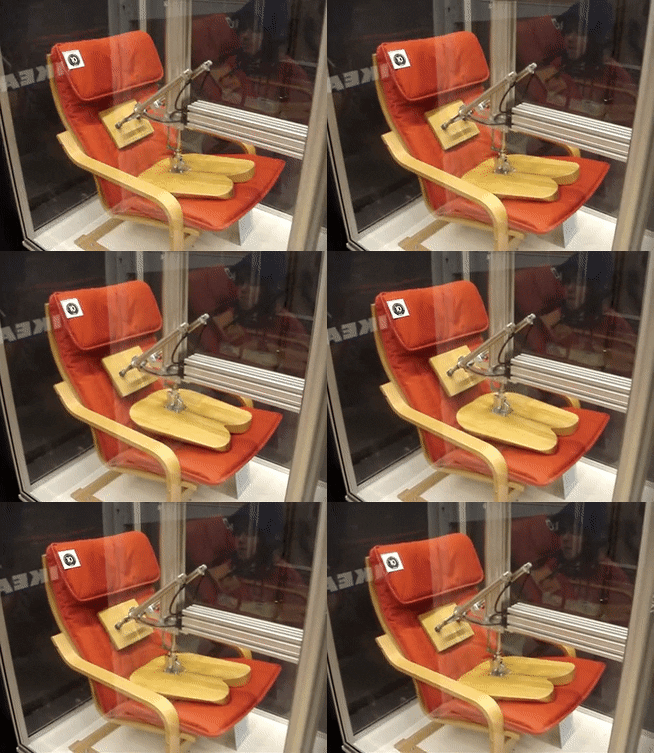
IKEA runs physical durability tests right inside its stores. Machines sit and rise on Poäng chairs, simulating millions of uses, around the clock.
Shoppers can watch the machine work while they browse. So seeing the test happen live convinces far more than any label ever could.
See Also