
Practical Sales Training™ > How To Convert > Service Packages

Service Packages
Most businesses think about the sale. Fewer think about what happens after it. But for many buyers, what comes after the sale is just as important as the sale itself. Will someone be there when things go wrong? What does support cost? Is there a plan?
Service Packages answer all of those questions before the buyer has to ask them. By bundling ongoing support into a clear monthly fee, you remove the uncertainty and make the relationship easy to say yes to. The buyer knows what they are getting. They know what it costs. And they know you will be there.
That clarity is reassuring. And reassurance, in sales, converts.
What Are Service Packages?
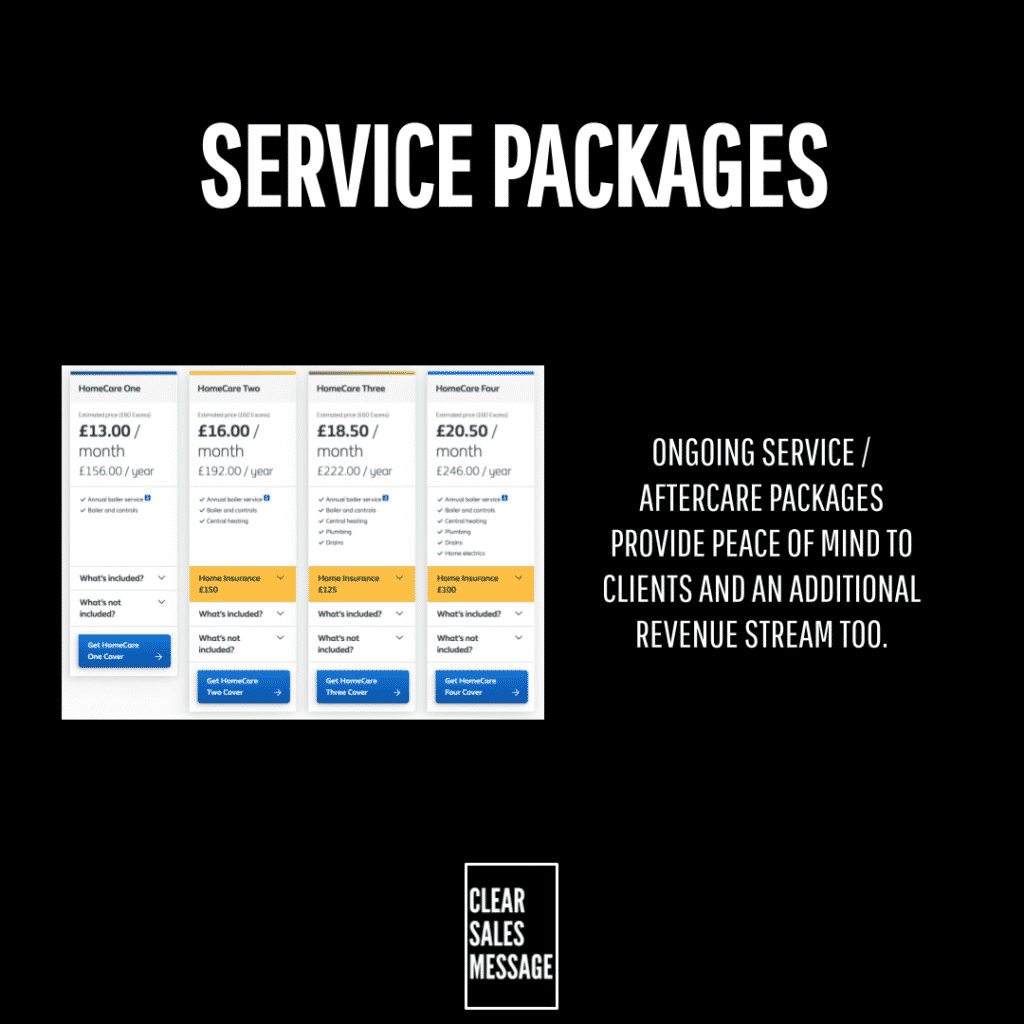
Service Packages are a collection of ongoing support, maintenance, or service activities bundled together and offered at a fixed monthly price. Instead of billing for each job separately or leaving buyers to figure out what they need, you create a clear menu of options at different price points. The buyer chooses the level that suits them and pays a set amount each month.
The model works for any business where buyers need ongoing support after the initial sale. Web design, IT, accounting, cleaning, gardening, software, property management, marketing, legal, and many others all lend themselves to this approach. If there is work that recurs, a package can cover it.
From the buyer’s perspective, the package replaces uncertainty with a plan. From your perspective, it replaces unpredictable project income with reliable monthly revenue. Both sides win, which is why the model works so well when it is structured properly.
Why Do Service Packages Work?
They work because they give buyers peace of mind. When a buyer knows that support is included and that a problem will be dealt with for a fixed cost, the anxiety of ownership drops. Because the fear of unexpected bills is removed, the overall experience of working with you feels safer and more professional. That feeling builds loyalty.
There is also a convenience factor. A buyer with a service package does not need to think about whether to call you when something needs attention. The decision is already made. Because the support is part of what they are already paying for, the barrier to reaching out is almost zero. That ease of contact strengthens the relationship over time.
Service Packages also help buyers with budgeting. Spreading the cost over a monthly fee makes the overall value easier to justify and easier to approve. A £499 monthly package is a more comfortable conversation than a £5,988 annual invoice for the same work. Because the monthly number is smaller, it reduces the resistance to committing.
For your business, the benefits are just as clear. Recurring revenue is more stable and more valuable than one-off project income. Because you know what is coming in each month, you can plan, hire, and invest with more confidence. And because packaged clients tend to stay longer, the lifetime value of each relationship increases significantly.
How Can You Use Service Packages In Sales?
Start by thinking about what your buyers need after they purchase. Consider the questions they ask, the problems that come up, and the maintenance or upkeep that is typically required. Those recurring needs are the raw material for a service package.
Map the Recurring Work
List everything you currently do for existing clients on an ongoing basis. Security updates, check-ins, reports, content, maintenance visits, reviews. Because every item on that list is something a new client might also need, it can become part of a package. Grouping related activities together creates a natural bundle that is easy for buyers to understand and value.
Create Three Tiers
Three tiers works well because it gives buyers a clear choice without overwhelming them. A basic tier covers the essentials at a lower price point. A mid tier adds more value for buyers who want better coverage. A premium tier covers everything for buyers who want the full service. Because most buyers will compare the options and choose the middle or the top, a three-tier structure tends to convert better than a single flat offering.
Name the Tiers Clearly
Names like Basic, Growth, and Premium tell the buyer something about what each tier is for and who it suits. Clear names reduce the decision-making effort and make it easier for buyers to self-select the right level. Because the tier name shapes expectations before the buyer reads the detail, choose names that reflect the outcome each level delivers rather than just the price.
Build the Mid Tier to Be the Main Seller
Most buyers will land on the middle tier. So design it to represent genuine value at a price that works for both sides. Make sure it contains everything a typical client needs without requiring the premium tier. Because the mid tier will carry the most volume, getting its content and pricing right is the most important design decision you make when building your packages.
Present Packages at the Point of Sale
The best time to introduce a service package is when the buyer has just said yes to the initial purchase. They are already in a buying mindset and already trust you. Introducing a package at that moment feels like a natural next step rather than a separate sale. Because the buyer is thinking about the future of the relationship, the package lands well when it is presented as the continuation of what they have just committed to.
When Service Packages Work Best
Service Packages work best when the buyer has ongoing needs after the initial purchase. The more often a buyer is likely to need support, the more valuable a fixed monthly package feels. Because the alternative is an unpredictable stream of invoices, a package that covers everything gives the buyer something much more comfortable to plan around.
They also work well when the buyer is not technical or expert in the area you cover. A business owner who does not understand IT gains enormous reassurance from knowing that someone is managing it all for a fixed cost. Because the knowledge gap creates anxiety, the package resolves it. The less the buyer knows about what you do, the more they value the peace of mind a package provides.
Similarly, they work well in competitive markets. When several suppliers offer a similar one-off service, a package creates a reason to stay. Because the buyer is now in an ongoing relationship rather than making a new purchase decision each time, the switching cost increases naturally. The package builds loyalty without pressure.
When Service Packages Become Dangerous
The main risk is underpricing. If the package fee does not reflect the true cost of delivering the work, the model erodes your margins over time. A package that seemed profitable at launch can become a drain as client needs grow and the price stays fixed. So cost every package carefully before you launch it and build in a review so prices can be adjusted as the business evolves.
There is also a scope risk. Without clear boundaries around what the package includes, some clients will push for more than the package was designed to cover. Because the fixed fee creates an expectation of unlimited access in some buyers’ minds, having a clear scope for each tier is essential from day one.
Common Service Package Mistakes
Pricing Packages Without Costing Them
Many businesses set package prices based on what feels competitive rather than what the work actually costs to deliver. Over time, this destroys the model. So before setting any price, calculate the real cost of delivering each tier every month. Include time, tools, overheads, and a reasonable margin. Because a package that does not cover its costs will eventually need to be unwound, getting the pricing right from the start is critical.
Not Defining the Scope
A package without a clear scope invites scope creep. Clients will naturally ask for more over time, especially if the package feels like a catch-all relationship rather than a defined service. So write down exactly what each tier includes and what falls outside it. Because managing scope starts with having a clear agreement, the time spent defining it at the start saves far more time later.
Making the Tiers Too Similar
If the difference between tiers is not clear or compelling, buyers will default to the cheapest. Each tier needs to offer a meaningfully better outcome, not just a few extra line items. So think about what the buyer gains by moving up a tier and make that gain obvious. Because the perceived value gap between tiers drives upsells, the bigger and clearer the gap, the more buyers will choose the higher option.
Not Reviewing and Updating Packages
A package designed two years ago may no longer reflect your costs, your capabilities, or your buyers’ needs. So review packages at least once a year. Update the content, adjust the pricing, and remove anything that no longer makes sense. Because clients on outdated packages represent a risk to your margins, keeping packages current is part of running the model well.
Service Packages – An Example
A web design agency offers three monthly service packages to clients after their site is built.
Basic Care Plan – £99 per month:
- Website backups
- Security updates
- Basic technical support with email response within 48 hours
Growth Plan – £249 per month:
- Everything in the Basic Care Plan
- Monthly content updates such as new blog posts or pages
- SEO performance reports
- Priority support with response within 24 hours
Premium Plan – £499 per month:
- Everything in the Growth Plan
- Unlimited content updates
- Advanced SEO and analytics
- 24/7 emergency support
Each tier gives the client predictable costs and a clear level of cover. The agency benefits from stable monthly income and longer client relationships. Because the package removes the need for the client to think about support, the relationship becomes stickier and the lifetime value of each client increases. That is Service Packages working exactly as they should.
See Also