

Practical Sales Training™ > Selling Communication Basics > Semiotics
Semiotics
Before a buyer reads your headline, they have already processed your image. Their first impression forms before a single word lands. That is not a figure of speech. The brain handles visuals around 60,000 times faster than text.
So the images you choose are not decoration. They are part of your message. And like all communication, they can work well or badly.
Semiotics is the study of how we read images and symbols. It helps you choose visuals that do real selling work, rather than just fill space.
What Is Semiotics?
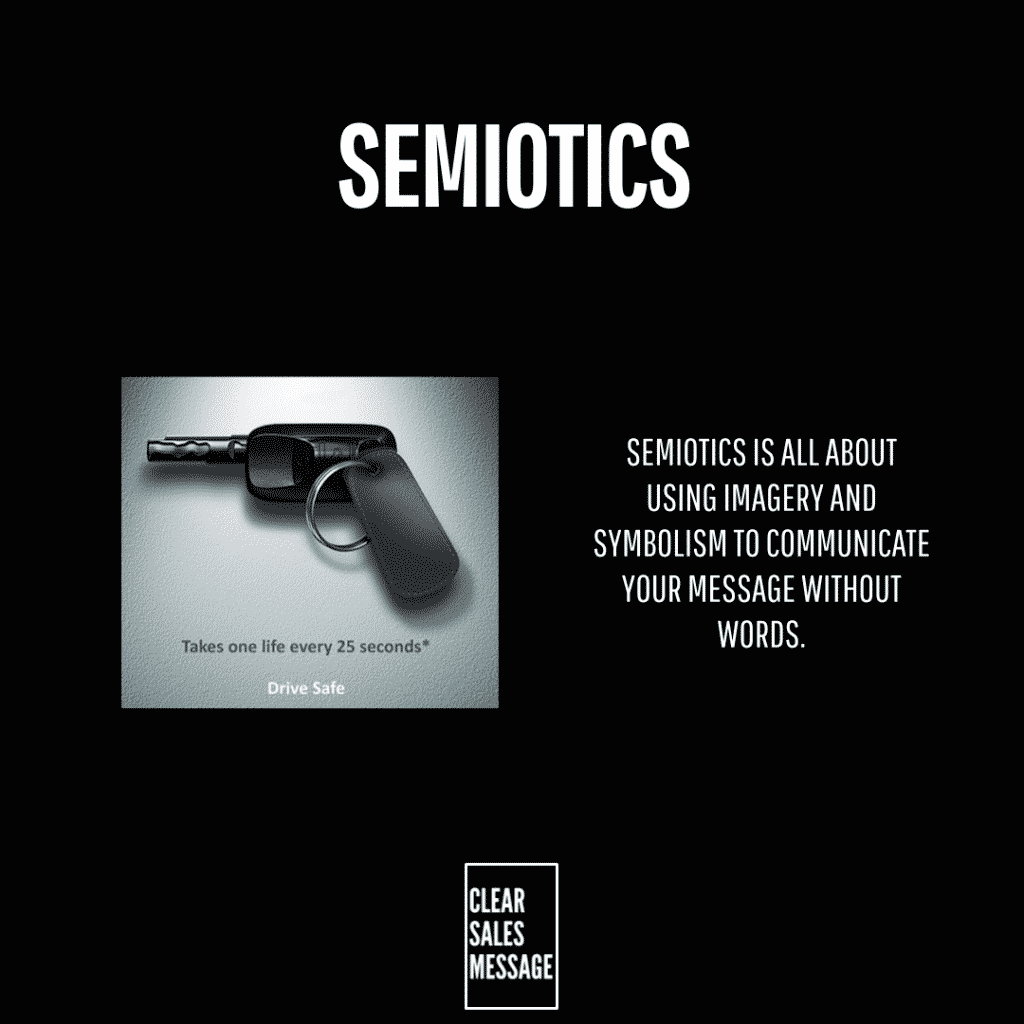
Semiotics is the study of signs, symbols, and how we interpret them. Every image carries meaning beyond what it literally shows. A red rose does not just mean a flower. Take a luxury car – it does not just mean transport. A white coat does not just mean clothing. Each one triggers a set of ideas that the viewer brings to the image without thinking.
In sales and marketing, semiotics means using those ideas on purpose. The images you use tell buyers something about your offer before they have read a word. Pick the right ones and they back up your message. The wrong ones hurt it – often without the buyer being able to say why.
Because these ideas work below the surface, they are hard to argue with. A buyer does not decide to feel safe from a certain image. It just happens. That makes semiotics one of the most powerful tools in sales writing.
Why Does Semiotics Work in Sales?
Images grab attention faster than text. A buyer scanning a page will stop at an image before they read a headline. So the image gets to speak before your copy even starts. When it is well chosen, it does more than attract attention. It sets the tone for every word the buyer reads next.
Visuals also carry things that are hard to put into words. Quality, warmth, urgency, trust. These are felt before they are understood. A photo of a product in the right setting says more about your brand than a full paragraph could. Because the response is instant and wordless, it gets past the doubt that text can trigger.
There is also a memory advantage. We recall images far more than words. A strong visual linked to your brand will stick long after the text fades. So good use of semiotics is not just about first impressions. It is about being there in the buyer’s mind when the moment to buy comes.
How Can You Use Semiotics In Sales?
Start by thinking about what your offer stands for, not just what it does. What feeling do buyers want when they use it? So ask yourself what ideas you want your brand to carry. Those answers point you to the right images, symbols, and themes.
Choose Images That Show the Benefit, Not Just the Product
On a white background, a product shot tells the buyer what it looks like. Show it in use in the buyer’s world and it tells them how it will feel. Because buyers buy results, not features, images that show the outcome are nearly always more persuasive.
Use Symbols That Carry the Right Associations
Certain symbols carry fixed meanings: a padlock means safety, a clock signals speed, a handshake means trust. These links run so deep that the symbol alone can trigger the feeling without any text. Think about the ideas your offer needs to create, then find symbols that already carry them.
Consider Colour and Texture
Colour has meaning too. Black signals premium and weight. Green signals nature and health. Red signals speed or passion. These are not rules, but they are strong enough to shape how buyers see you. Similarly, textures in images carry semiotic weight – worn leather reads very differently to polished steel. Make sure your visual choices line up with the ideas you want to build.
Let the Image Prove a Claim Without Text
The strongest use of semiotics is when an image makes a point that would take a sentence to explain. A product in an extreme context shows its strength at a glance. Because the viewer draws the conclusion themselves, it lands harder than anything you could have written.
When Semiotics Works Best
Semiotics works best when the link between your image and your message is instant. If a buyer has to think about what an image means, it has not worked. Quick recognition is the goal. When it lands, the buyer gets the message and moves on. No friction.
It also works well in tight markets where products look the same on paper. When the real gap between rivals is small, the emotional gap created by imagery can tip the decision. Because buyers often choose on feel, a strong visual identity can be the edge.
When Semiotics Becomes Dangerous
An off-brand image can put buyers off without them knowing why. One that clashes with your copy does the same. Because the reaction runs below the surface, it is hard to undo. Test your images with real buyers before you commit.
There is also a cultural risk. Symbols do not carry the same meaning in every market. Colours, gestures, and images that land well in one place can mean something else in another. So if you sell across different groups, check your visuals with people from each one first.
Common Semiotics Mistakes
Using Stock Images That Feel Generic
A smiling person in a headset tells buyers nothing about you. Nor does a handshake in front of a city skyline. Stock images that every firm in your space uses give you no semiotic edge. Choose images that connect directly to your offer and brand. Because the ideas need to be yours, generic images do not cut it.
Choosing Images for Aesthetics Rather Than Meaning
A beautiful image with no useful links wastes the space. Every image in your marketing should earn its place. Ask what this image is saying before you use it. If the answer is not clear, find one that is. Because buyers will read meaning into every image no matter what, it always pays to be deliberate.
Letting the Image Contradict the Copy
When the image and the text pull in different directions, buyers feel it even if they cannot say why. A headline about speed next to a slow-looking image. Or a luxury claim next to a photo that looks cheap. These clashes hurt both parts. So treat images and copy as one message, not two.
Semiotics – An Example
I did not even need to read the copy to get the main selling point of this tray. One look was enough.

The image shows the product in conditions that would expose any flaw at once. Buyers get the benefit before reading a word. No claim, no list, no pitch. The semiotics did all the work.
That is what strong visual communication looks like. Find the image that proves your point. Let the buyer reach the conclusion on their own. The impression it leaves is far stronger than any line of copy.
See Also