
Practical Sales Training™ > How To Get Attention > Motion Bias

Motion Bias
Your buyers are not ignoring you on purpose. They are just overwhelmed. There is too much to look at, too much to read, and too little time. So most things get filtered out before they even register.
Motion cuts through that filter. Because the human brain is built to spot movement, anything that moves gets priority. It does not matter how good your static message is. A moving one will get seen first.
That is Motion Bias. And once you understand it, you start to see opportunities to use it everywhere.
What Is Motion Bias?
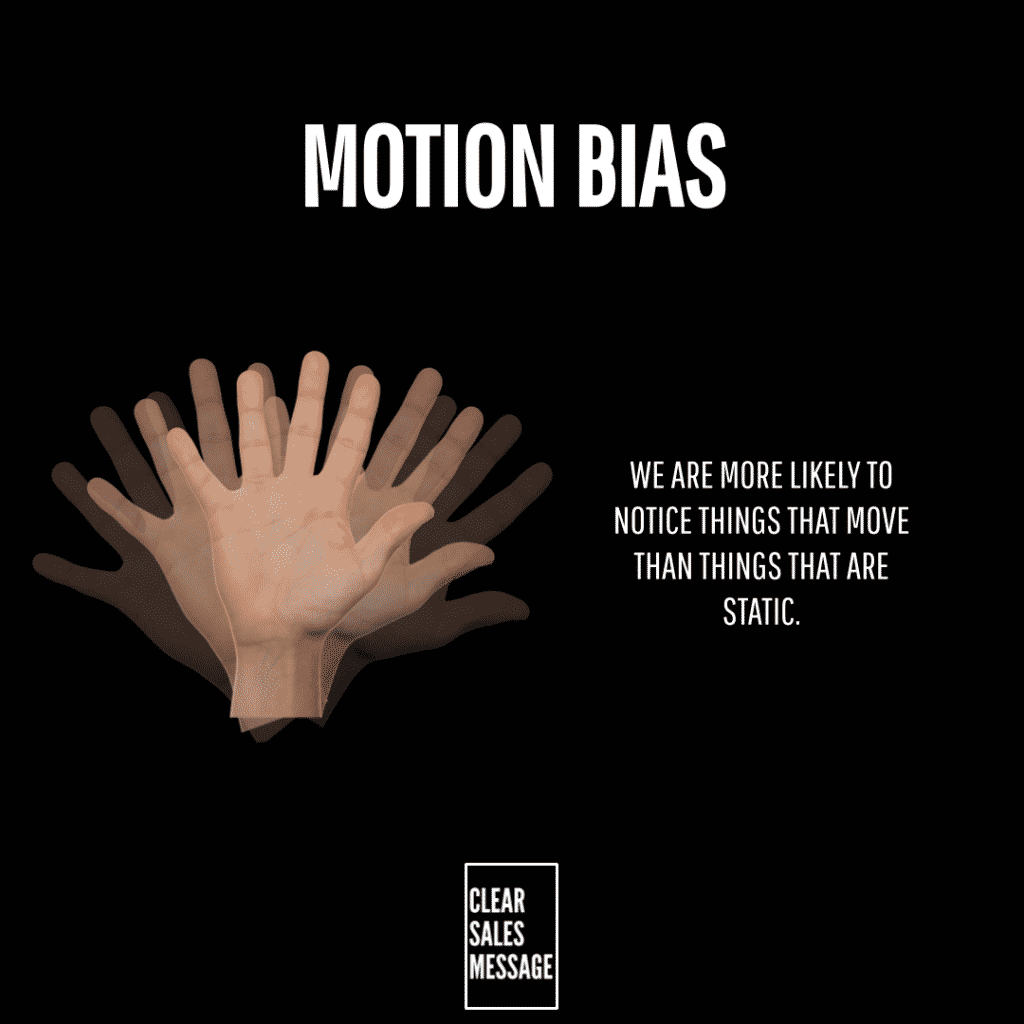
Motion Bias is the tendency humans have to notice moving things more readily than things that are still. When something moves in our field of vision, the brain flags it automatically. We look before we even decide to.
This is why a flashing sign gets more attention than a printed one. It is why an animated logo draws the eye faster than a static image. And it is why videos on social media outperform plain text posts for grabbing attention in a busy feed.
Why Does Motion Bias Work?
It works because our brains have not changed much since our ancestors were dealing with real threats. Anything that moved in the environment back then could be dangerous. So the brain learned to react to motion fast, before conscious thought kicks in.
That same instinct is still running today. Anything that moves or does not match its surroundings gets treated as a potential threat and draws our attention. Your buyers are not choosing to look at the animated banner. They just do, because their brain tells them to.
As a result, motion is one of the most reliable ways to get noticed. It works below the level of conscious decision-making, which means it works even on buyers who are actively trying to ignore you.
How Can You Use Motion Bias In Sales?
Animate Your Logo or Brand Assets
A moving logo in a video intro or on a website header does more than look polished. It triggers Motion Bias and pulls the eye to your brand at the exact moment you want attention. Even a subtle animation is more effective than a static image because the brain responds to the movement first.
Use Video on Social Media
Video content moves, and feeds are full of static posts. So video naturally wins the attention battle before anyone has read a single word. Even a short looping clip with no sound will get more eyes on it than a still image, because Motion Bias kicks in as the buyer scrolls past.
Add Movement to Key Calls to Action
A gentle pulse or fade on a button or call-to-action draws the eye to exactly where you want it. Because the rest of the page is still, the movement stands out. That makes the buyer more likely to notice it and more likely to click.
Use Flashing or Moving Signage
In physical spaces, digital boards and moving displays outperform static posters every time. A digital menu board with sliding content or a window display with a moving element will capture attention from further away and hold it for longer. If you have a physical presence, motion is worth the investment.
When Motion Bias Works Best
Motion Bias works best in busy, competitive environments where your message is fighting for space. A moving element on a crowded social feed, a busy high street, or a cluttered inbox will always stand out more than the same message delivered without movement.
It also works well at the point of decision. If a buyer is on your website and hovering near a key action, a subtle animation near that button can tip them over the line. Because the movement draws the eye, the message lands at just the right moment.
When Motion Bias Becomes Dangerous
Too much movement causes the opposite effect. When everything is animated, nothing stands out. The brain adapts and starts filtering out the noise again. So use motion with purpose, not just because you can.
There is also a risk of irritating the buyer. A flashing element that never stops, or an animation that plays every time a page loads, can feel intrusive. Because the goal is to guide attention, not hijack it, less is usually more. One well-placed movement beats five competing ones every time.
Common Motion Bias Mistakes
Moving the Wrong Thing
Motion draws the eye to whatever is moving. So if you animate a decoration rather than your key message or call to action, you waste the effect. Before you add movement, ask what you actually want the buyer to look at. Then put the motion there.
Using Motion That Clashes With the Brand
A fast, flashy animation on a premium brand page sends the wrong signal. Movement should match the tone you want to set. A slow fade feels different to a rapid flash. So choose the style of motion with as much care as you choose the content it is drawing attention to.
Ignoring Accessibility
Some people find flashing or rapid movement uncomfortable or distracting, and for some it can cause real problems. So always provide a way to pause or stop looping animations where possible. Good motion design gets attention without causing harm.
Motion Bias – An Example
A coffee shop replaces its static chalkboard with a digital menu board where the daily specials slide in and out every few seconds. Customers’ eyes go straight to the moving text, even when they are not actively looking for the specials.
An online clothing store adds a gentle pulse to their “Shop Now” button. Because the rest of the page is still, the movement stands out and draws the eye to exactly the action the store wants buyers to take. Both examples use Motion Bias to do the same thing: guide attention without saying a word.
See Also: