
Practical Sales Training™ > How To Get Attention > The Handwritten Effect

The Handwritten Effect
Most communication today is fast, cheap, and easy. Emails go out in seconds. Cards get printed signatures. Envelopes run through a machine. Because of that, anything handwritten feels different the moment someone sees it.
It is not just old fashioned, it says someone took time to write this specifically for you. That feeling is rare, and rare things get noticed.
The Handwritten Effect is one of the simplest ways to stand out, build a bond with a buyer, and be remembered long after the message is read. And it costs almost nothing to use.
What Is The Handwritten Effect?
The Handwritten Effect is the attention and goodwill that a handwritten message creates compared to a printed or digital one. When someone receives something written by hand, it feels more personal, more considered, and more worthy of attention.
It works across many formats. A note in a parcel. A card sent to a client. An envelope addressed by hand in a pile of printed mail. Each of these creates a moment of surprise that a typed message never does.
The key is what handwriting communicates without saying a word. It says: I took time on this. That signal is powerful because it is so rare. Most businesses have stopped doing it, which means the ones that still do immediately stand out from the crowd.
Why Does The Handwritten Effect Work?
It works because it is different. Very few businesses use handwriting in their communication because it takes more time and more effort than print or digital. But that is exactly why it works. When everyone else is doing the same thing, doing something different is all it takes to get noticed.
A handwritten envelope in a pile of printed mail does not need to shout. It stands out by simply being what it is. The recipient picks it up first. They open it with more curiosity. So the message inside gets read with more attention than anything else in that pile.
Handwriting also triggers warmth. It feels like something a person did, not something a business produced. That human quality builds a connection before the reader has even reached the message. As a result, the content lands better and the feeling it creates lasts longer.
There is also a reciprocity element at play. When someone goes to the effort of writing by hand, the recipient often feels a pull to respond or to buy again. Because the gesture feels personal, and people naturally want to return kindness with kindness.
How Can You Use The Handwritten Effect In Sales?
The good news is that you don’t need perfect handwriting or a lot of time. A short, genuine note written by hand does far more than a long printed letter. The effort is what matters, not the length.
Send a Handwritten Thank You Note
When a client buys, places a repeat order, or gives you a referral, a handwritten thank you note is one of the strongest things you can send. It is unexpected, personal, and hard to forget. Because most businesses send nothing at all, a handwritten note puts you in a category of your own. Keep it short and genuine. Two or three lines is enough.
Write Your Christmas Cards by Hand
Printed signatures on Christmas cards feel like going through the motions. Everyone can tell. But a card with a handwritten personal line shows you thought about the person receiving it. That small act of care does more for the relationship than the most expensive printed card ever could.
Address Outreach Envelopes by Hand
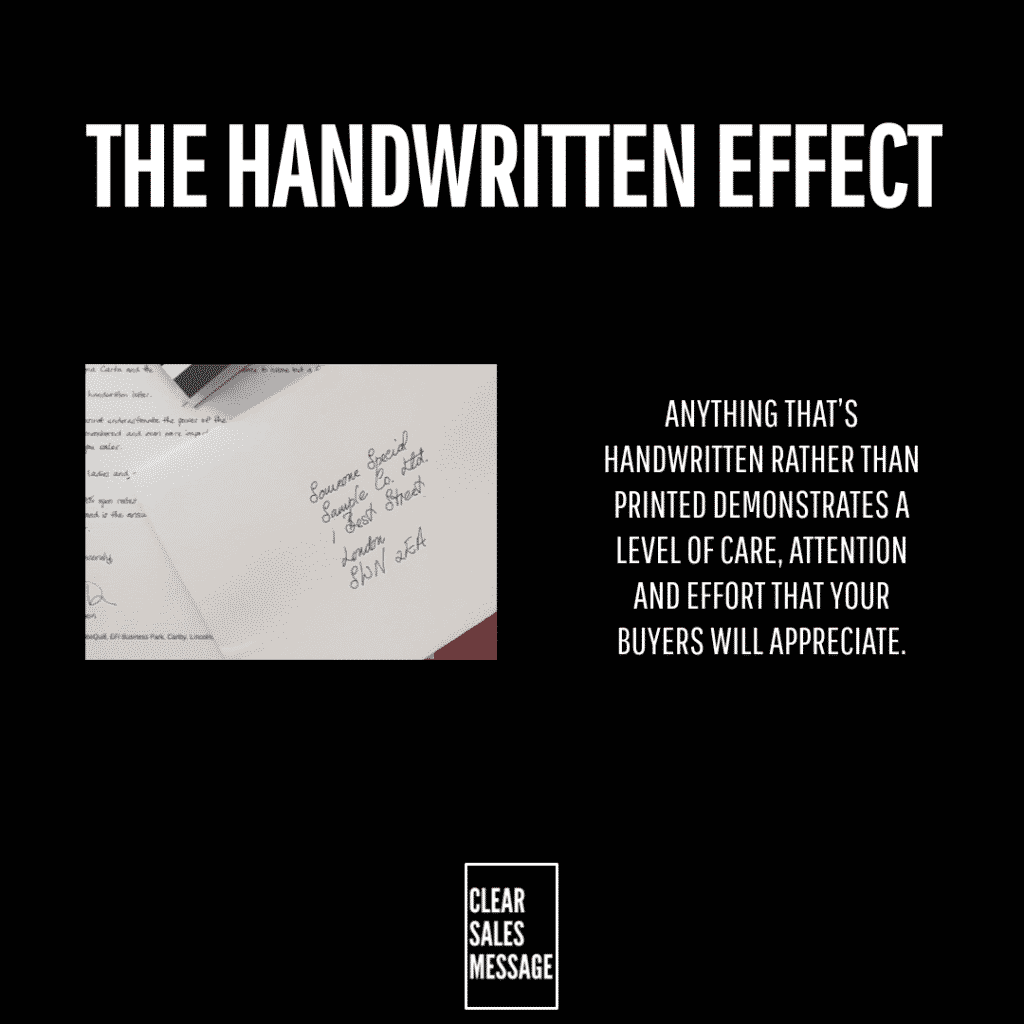
If you send physical outreach, handwriting the address on the envelope changes everything. A printed label says marketing material. A handwritten address says personal letter. Most people open a handwritten envelope without a second thought. So before the prospect even reads your message, the Handwritten Effect has already done its job.
Add a Note to Product Deliveries
For product businesses, including a handwritten note in the parcel creates a moment of delight at unboxing. It turns a transaction into an experience. When a buyer opens their order and finds a personal note inside, they feel valued rather than processed. That feeling drives reviews, social shares, and repeat purchases, all from a single index card and a pen.
When The Handwritten Effect Works Best
It works best when the relationship matters. The closer the buyer is to you, the more impact a handwritten message has. A note to a long-standing client lands very differently to one sent to a cold contact. So focus your effort on the people whose loyalty you want to keep and grow.
It also works best when it is unexpected. If buyers come to expect a note with every order, the surprise fades. But when it appears without warning, it creates a genuine moment. So use it with intention, not as a checkbox in a process.
Also, the Handwritten Effect is most powerful when the content is personal. A note that references the specific order, the client’s name, or something you know about them shows real care. A generic “thanks for your purchase” written by hand is better than a printed version, but not by much. Make the words matter as much as the handwriting.
When The Handwritten Effect Becomes Dangerous
The risk is in poor execution. Illegible handwriting, a rushed scrawl, or a note that looks like it took ten seconds can do more harm than good. The signal you are trying to send is care and effort. When the handwriting looks careless, the message reads the opposite way.
There is also a scale problem. Handwriting does not scale well. When you are sending hundreds of notes a week, the quality drops and the personal feel goes with it. So be honest about what you can sustain. A small number of genuinely personal notes is far more effective than a large volume of rushed ones.
However, the biggest danger is using handwriting as a gimmick rather than a genuine gesture. Buyers can tell the difference between something written with care and something written because someone read a tip about it. So when you use the Handwritten Effect, mean it. Because sincerity is the whole point.
Common Handwritten Effect Mistakes
Writing Too Much
One common mistake is trying to write a full letter by hand when a short note would land better. Long handwritten messages can feel hard to read and lose the impact of brevity. Two or three genuine lines work better than a full page. Because the point is the effort and the personal touch, not the word count.
Making It Generic
Another mistake is writing the same note to everyone. When a handwritten message feels like a template, it loses most of its power. Even a small personal detail makes a big difference. Use the person’s name, mention what they bought, or reference something specific about them. That one extra line is what turns a nice gesture into a genuinely memorable one.
Saving It Only for New Buyers
A third mistake is sending handwritten notes to new buyers but never to long-standing clients. In fact, the people who have been with you the longest deserve it most. A handwritten note to a client you have worked with for three years tells them they are still valued, not taken for granted. So spread the effort across your whole client base, not just the newest names on the list.
The Handwritten Effect – An Example
A handwritten thank you note inside a coffee order says more than any printed insert ever could. The note references the brand, adds a personal line, and is signed off by the team who packed it.
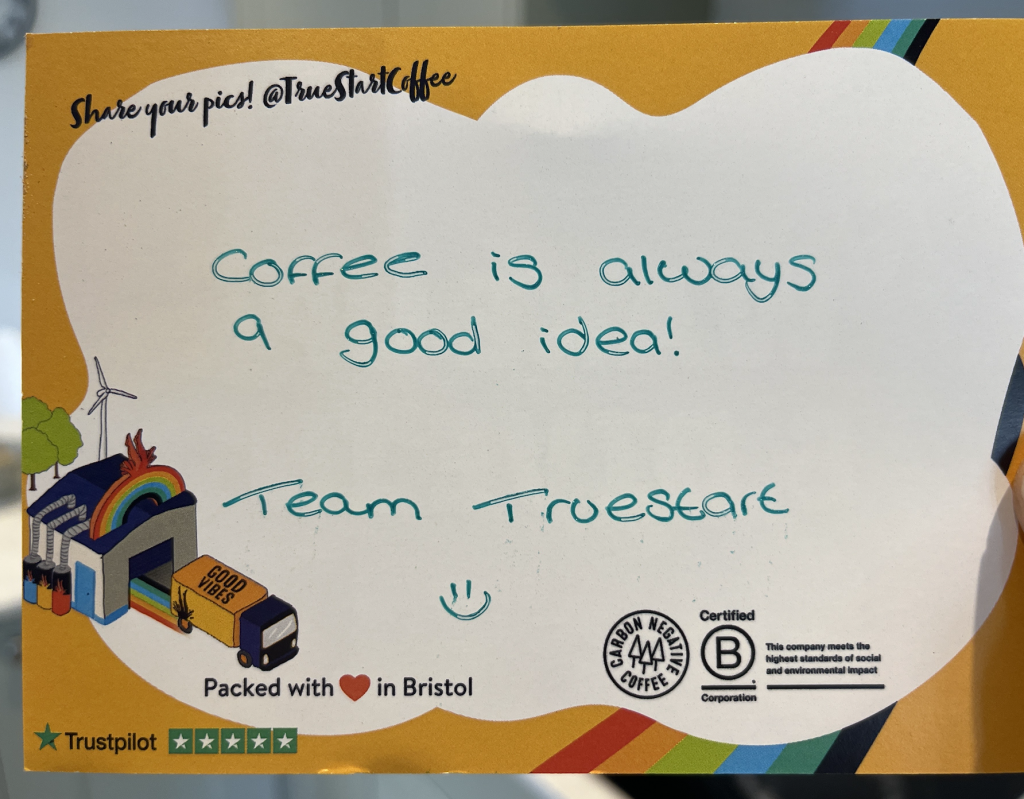
That small piece of card does something that a slick printed flyer cannot. It makes the buyer feel like a person, not an order number. When that happens, they want to buy again. Not because the product changed, but because the experience felt good. That is the Handwritten Effect at its best.
See Also