
Practical Sales Training™ > How To Keep Your Clients Happy > Incentivised Feedback

Incentivised Feedback
Most businesses are guessing. They guess what clients think, guess what is not working, and guess what buyers really want. That guessing costs money, time, and clients they could have kept.
Incentivised feedback is the fix. When you offer a small reward in exchange for honest opinions, people take the time to respond. And the insight you get back is worth far more than the cost of the gift card or discount you used to get it.
The businesses that grow fastest are usually the ones that listen best. Incentivised feedback makes listening easy, structured, and scalable.
What Is Incentivised Feedback?
Incentivised feedback is the practice of offering a reward to clients or prospects in exchange for their honest thoughts. That reward might be a gift card, a discount on a future purchase, a free product, or entry into a prize draw. The point is to give people a reason to share opinions they would otherwise keep to themselves.
It is different from simply asking for a review. Reviews ask buyers to speak to others. Incentivised feedback asks buyers to speak to you. The goal is insight, not social proof. When done well, it gives you a direct line into what your buyers think, feel, and want that no amount of guesswork can match.
It works for product businesses, service businesses, and SaaS companies alike. Any business that wants to improve what it offers, reduce churn, or understand its buyers better can use it.
Why Does Incentivised Feedback Work?
It works because most people will not spend time helping a business for nothing. Even happy clients have other things to do. A survey with no reward gets ignored. But a survey with a £10 gift card at the end gets completed. The incentive tips the balance from “I’ll do it later” to “I’ll do it now.”
There is also a fairness element. When you ask someone to give up their time and thinking, offering something in return feels like the right thing to do. Because of that, the exchange feels fair rather than extractive. Buyers who feel respected are more likely to give honest, useful answers rather than tick boxes to get it over with.
Also, incentivised feedback strengthens the relationship. When a client sees that you are actively trying to improve and that you value their opinion enough to pay for it, they feel more invested in your success. So the feedback exercise does two jobs at once. It gives you insight and it builds loyalty at the same time.
How Can You Use Incentivised Feedback In Sales?
Start by identifying what you most need to know. What part of your offer are you unsure about? Where do clients seem to drop off? What questions do you keep asking yourself that you can’t answer from the inside? Build a short list of those questions first, then design the survey around them.
Use a Gift Card for High-Value Insight
When the feedback you need is detailed or requires real thought, a gift card is the right incentive. It has clear cash value, it is easy to deliver, and it signals that you take the exercise seriously. A £10 or £15 gift card for a five-minute survey is a fair exchange that most buyers will accept. Because the reward feels proportionate to the effort, the response rate goes up significantly.
Offer a Discount on the Next Purchase
For product and subscription businesses, a discount on the next order works as both an incentive and a retention tool. The buyer gives you feedback, and in return they get a reason to come back. So you gain insight and reduce churn in the same move. A 10% or 15% discount is usually enough to prompt a response without eating too far into your margins.
Run a Prize Draw for Larger Audiences
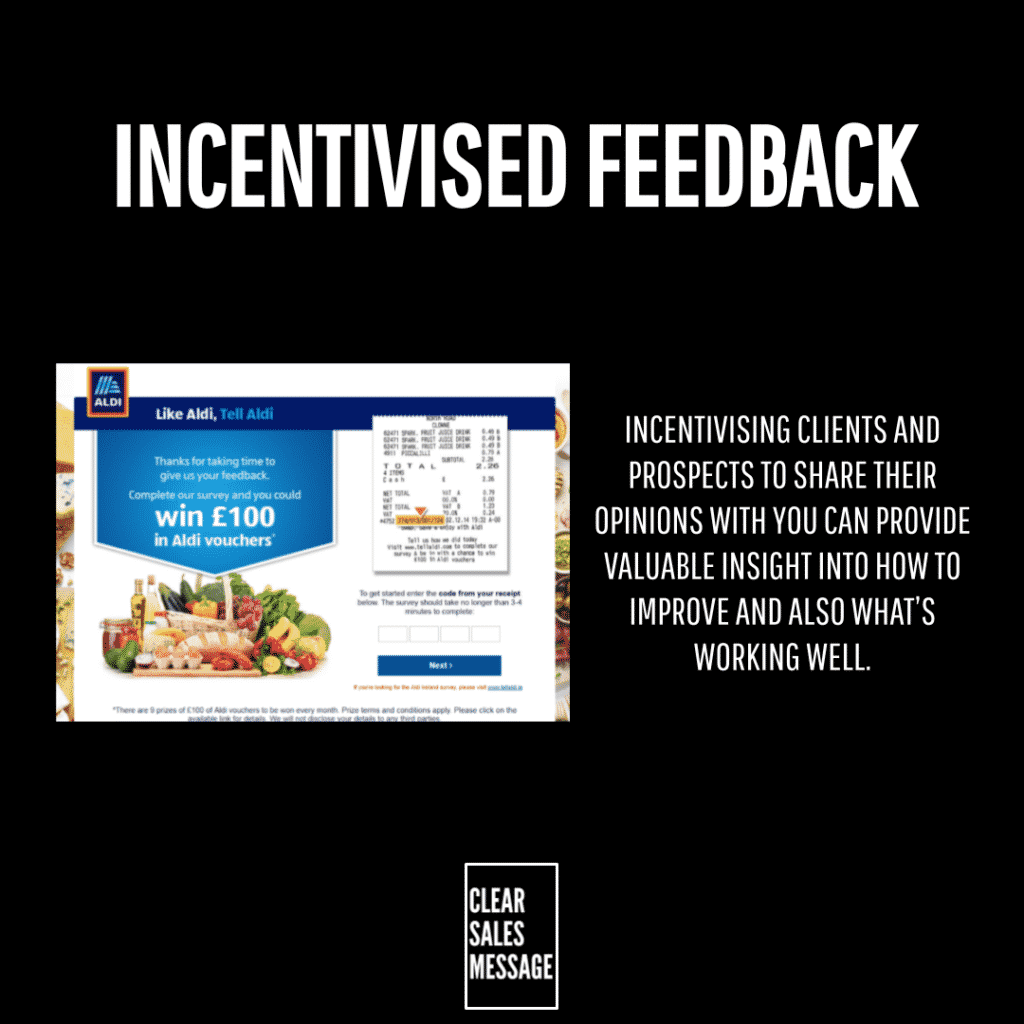
When you need responses from a large group and the cost of individual rewards is too high, a prize draw works well. One meaningful prize, such as a £100 voucher or a free product bundle, spread across hundreds of respondents keeps the cost low while still giving people a reason to take part. Also, the competitive element of a draw can increase engagement, especially when the prize is appealing.
Ask Prospects, Not Just Clients
Some of the most useful feedback comes from people who chose not to buy. Why did they look? What put them off? What would have changed their mind? Incentivising prospects to answer those questions gives you insight that no client survey can. Because the people who didn’t buy know exactly what was missing from your offer. So ask them.
When Incentivised Feedback Works Best
It works best when the questions are short and specific. Long surveys with vague questions frustrate respondents and produce low-quality answers. Five focused questions with clear intent will always beat twenty broad ones. When the survey is quick to complete, more people finish it and the answers are sharper.
It also works best when the timing is right. Asking for feedback straight after a purchase, at the end of an onboarding period, or following a key moment in the client journey catches people while the experience is fresh. The closer the ask is to the moment being discussed, the more accurate and useful the response.
Also, incentivised feedback works best when you act on what you learn. Clients who gave their time and opinions want to know it mattered. When you close the loop, tell them what changed as a result, and show them their feedback made a difference, the trust and loyalty that builds is hard to put a price on.
When Incentivised Feedback Becomes Dangerous
The main risk is skewing the results. When the incentive is tied to a specific answer or when the questions are written to lead respondents in a direction, the feedback stops being useful. You end up with data that confirms what you wanted to hear rather than what you need to know. So keep the questions neutral and the incentive unconditional.
There is also a risk of attracting people who only want the reward. Some respondents will rush through a survey just to claim the gift card, giving low-quality answers that waste your time. To reduce this, include one or two open-ended questions that require genuine thought. These filter out the box-tickers and surface the real insight.
However, the biggest danger is collecting feedback and doing nothing with it. When clients take time to share honest thoughts and nothing changes, they notice. The next time you ask, fewer people will respond. So treat every piece of feedback as a commitment to at least consider the change being suggested.
Common Incentivised Feedback Mistakes
Making the Survey Too Long
One common mistake is building a survey that takes ten minutes to complete when five would do. Every extra question reduces completion rates. So cut the list down to only what you truly need to know. If a question does not lead to a decision or a change, it does not belong in the survey. Keep it tight and the answers will be better for it.
Using Leading Questions
Another mistake is writing questions that nudge respondents towards a particular answer. “How much did you enjoy working with us?” assumes they did. A better question is “How would you describe your experience working with us?” When the question is open and neutral, the answer is honest. Because you cannot improve based on feedback that was shaped before it was given.
Never Closing the Loop
A third mistake is running a feedback exercise and going quiet afterwards. When clients hear nothing back, the effort they made feels wasted. So follow up. Even a short email that says “thank you for your feedback, here is what we are doing as a result” turns a one-way exercise into a two-way relationship. That follow-up builds trust in a way that almost no other touchpoint can.
Incentivised Feedback – An Example
A skincare brand wants to launch a new moisturiser but is unsure which scent buyers will prefer. Instead of guessing, they email 500 past buyers and offer a £10 gift card for completing a five-minute survey about product choices.
The response rate is three times higher than a standard survey. The insight helps the brand choose the right scent with confidence. The cost of the gift cards is far outweighed by the stronger product launch and the reduction in unsold stock.
A SaaS business uses the same idea to tackle onboarding drop-off. They send a follow-up email to new users:
“Tell us about your first 30 days using our software and receive a 10% discount on your renewal.”
The feedback reveals three friction points in the onboarding flow. The business fixes them, retention improves, and the discount encourages buyers to renew at the same time. One short survey does the work of a much more expensive research project.
See Also