


Practical Sales Training™ > How To Convert > The Imperfect Effect

The Imperfect Effect
What Is It?
The Imperfect Effect lets you sell damaged or flawed goods. Stock that might otherwise get thrown away or quietly written off.
It’s not about hiding the flaw. It’s about selling it on purpose, at the right price.
Why Does It Work?
It works because it gives buyers a cheaper way in, similar to a budget or starter version. Some buyers care more about price than perfection.
If you’ve got a lot of this stock, like out of season or out of date items, you can go further. You can build a whole outlet arm of your business around it.
Either way, you’re not losing the sale. You’re just finding the right buyer for stock that would otherwise sit unsold.
How Can You Use It?
Spot What Qualifies
This works best for physical goods. So look at your damaged, imperfect or misprinted stock and ask if it’s still genuinely usable. If it works but looks a bit off, it’s a candidate.
Label It Honestly
Create an obvious, CLEAR “Imperfect” listing or category. Don’t blur the line between your main stock and your flawed stock. Buyers need to know exactly what they’re getting.
Explain The Discount
Tell buyers why the price is lower. Name the actual shortcoming, rather than leaving them to guess. This protects your brand, since it shows the discount is earned, not random.
When It Works Best
This works best for physical products with a real, visible flaw. Misprints, cosmetic damage or slightly wrong batches all fit well here.
It also works well when you have volume. A single damaged item is a one off. A steady stream of flawed stock is a genuine business opportunity, so it’s worth building a proper system around it.
When It Becomes Dangerous
The risk is blurring imperfect stock with your main range. If buyers can’t tell the difference, your whole brand starts to feel less reliable.
Selling a flaw that’s actually a serious fault is also risky. A discount doesn’t fix a genuinely broken product, and buyers will remember the difference.
Used honestly, this recovers value you’d otherwise lose. Used carelessly, it can drag your main brand down with it.
Common Mistakes
Mixing Imperfect Stock With Regular Stock
If buyers can’t tell what’s flawed and what isn’t, trust drops fast. So keep the two clearly separated.
Underselling The Reason
A vague “slightly imperfect” label raises more questions than it answers. So be specific about what’s actually wrong.
Discounting A Real Fault
Cosmetic flaws are fine to sell. Genuine faults usually aren’t, no matter how cheap the price.
The Imperfect Effect – An Example
The Misprinted Pens
One product on Amazon is made entirely of misprinted pens. Each one writes perfectly well. They’re just not sellable as standard stock, because of the printing errors on them.
Instead of scrapping them, the seller bundles them and sells them as exactly what they are. Misprinted, but fully functional.
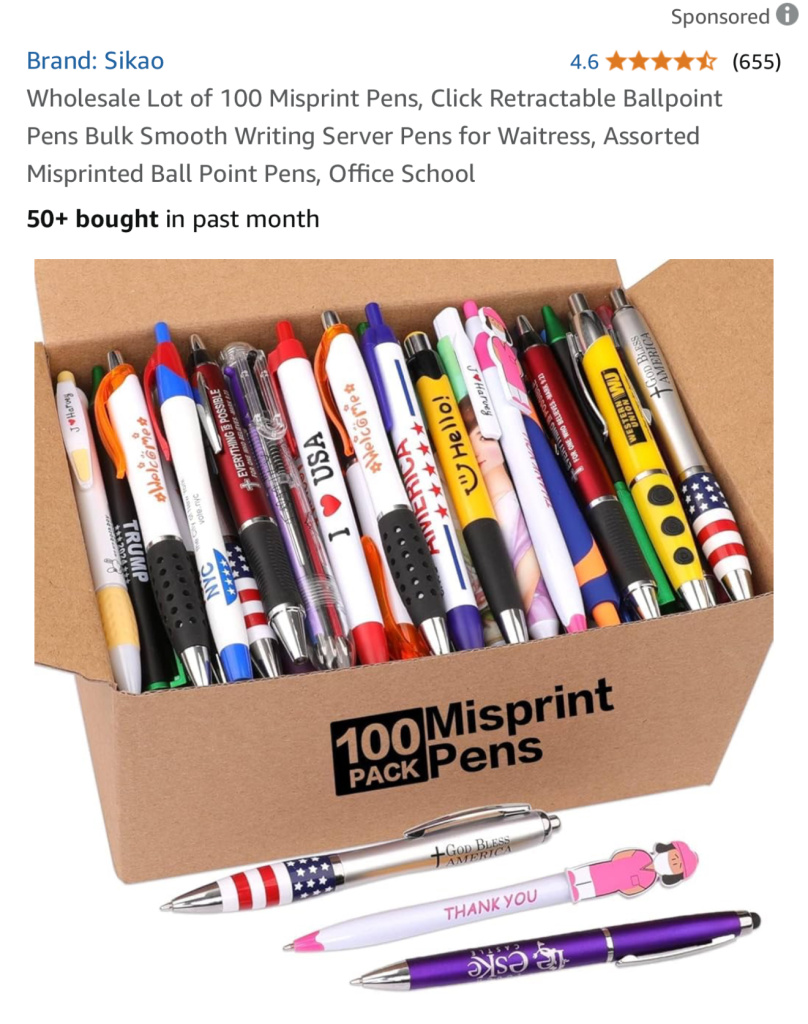
Buyers know exactly what they’re getting before they order. So there’s no confusion and no disappointment on arrival.
That’s the whole effect in one listing. A flaw, named honestly, turns unsellable stock into a real product.
See also